Vendorius B2B finds the companies that can buy what you sell, writes to them by email, and books the appointment in your calendar. Matteo Merlo, founder, has built acquisition systems for clients across many sectors.
Referrals bring clients who have already chosen you: what's the problem?
The client who comes through word of mouth skips all the steps: they don't need to realize they have a problem, they don't need to choose between solutions, they don't need to build trust from zero. They arrive already convinced, because someone they know told them.
This is what makes referrals the channel with the highest close rate. But it has a problem: you can't control it. You can't decide how many come in, when they arrive, from which sector. It depends on how satisfied your current clients are and how much they talk to others.
Building a business on this means you can't plan growth.
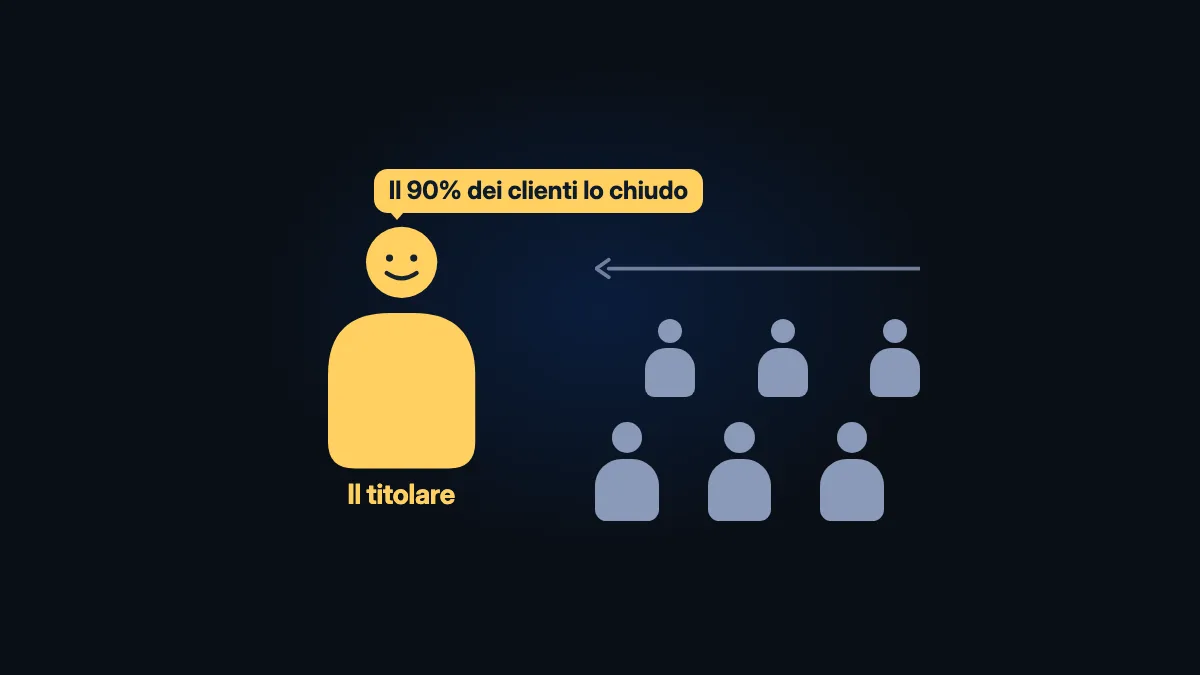
What's missing from companies that live on referrals?
A machine that brings clients in regardless of personal connections. A machine that can be measured, optimized, scaled.
It's not a new concept: B2B companies in other markets have been doing this for years. Most businesses that rely heavily on referrals haven't built this system yet. The gap creates opportunities for those who act first.
How does an acquisition system work without depending on referrals?
The starting point is finding the right companies to contact: not those in standard databases, which everyone already contacts, but companies selected based on concrete signals that suggest they might need what you sell right now.
Then there's the message: not a company presentation, but a sentence that starts from the client's problem. Almost everyone gets this wrong: they present their company to someone who doesn't even know they have a problem, and get no response.
Finally there's handling the responses: whoever responds has raised their hand, and needs to be contacted immediately, by a real person, not a bot.
This is a system you can measure: how many companies contacted, how many responses, how many appointments, how many clients. And it can be improved week by week.
Where to start?
Referrals don't stop: they keep working for people who already know you. You complement them with a system that brings in clients who don't know you yet.
It's not work you do once and then it runs by itself: it requires someone who knows how to do it, who already has data on what works in which sector, and who has the right tools.